← Maali Uncle website par wapas
Snake Plant Complete Profile: Grow Sansevieria at Home
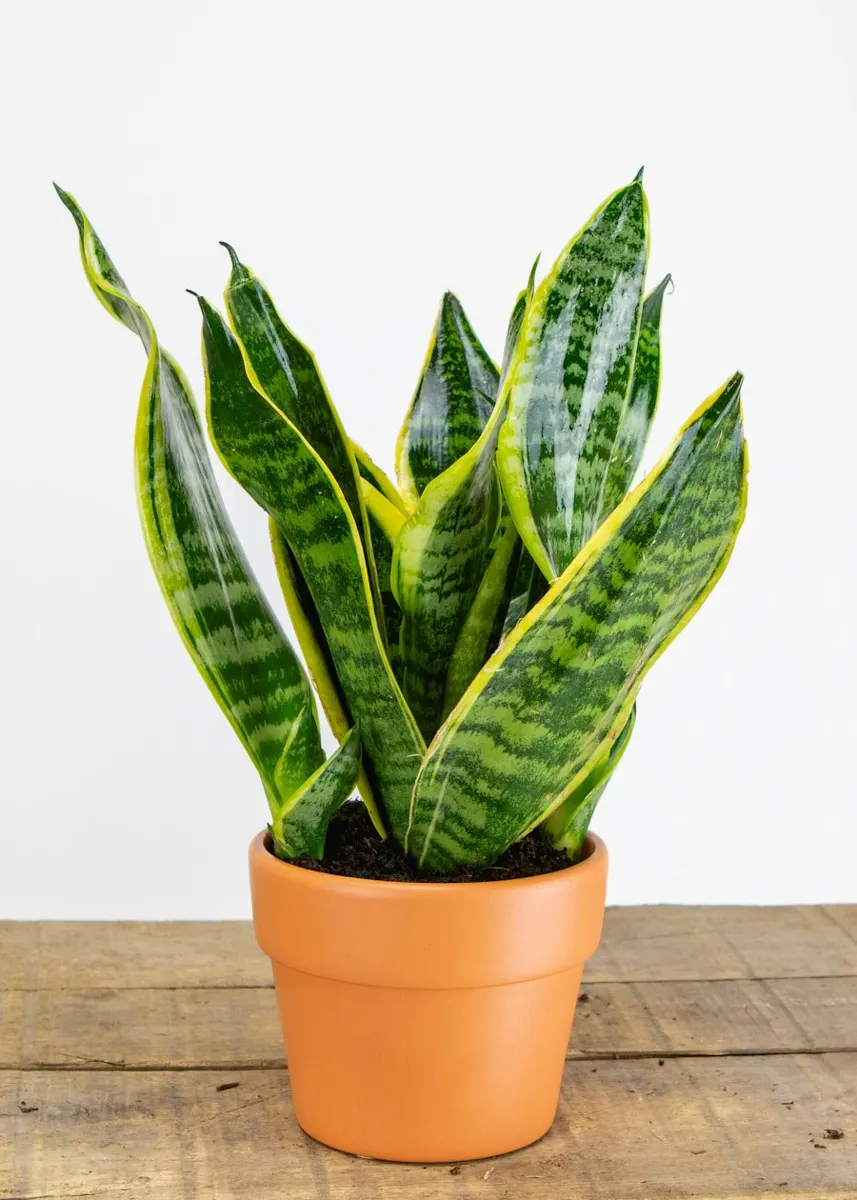
Snake plant is the toughest indoor plant in India — the one that survives the dark corner, the forgotten watering can and the holiday. What kills it is not neglect but kindness: too much water. This is the complete Maali Uncle profile for snake plant, written in the same 22-field structure as our tulsi profile and our money plant profile. Our shorter snake plant care guide covers daily care in brief; this profile is the full reference version.
Identity
- Common names: Snake plant, mother-in-law's tongue, Saint George's sword
- Botanical name: Sansevieria trifasciata — now reclassified as Dracaena trifasciata, though nurseries still sell it as Sansevieria
- Family: Asparagaceae
- Origin: West Africa, from Nigeria to Congo; a dry-climate plant by nature, which explains almost everything about how it likes to be treated
- Growth habit: stiff, upright, sword-like succulent leaves in a rosette; typically 30–90 cm tall in a pot, taller in warm conditions; slow-growing and clumping, spreading by underground rhizomes
How to identify good snake plant
Look for firm, upright leaves that stand on their own — a healthy leaf is rigid from base to tip, with a smooth, slightly waxy surface and clear banding. On the common Laurentii variety, the yellow leaf margins should be clean and even. Avoid plants with soft or floppy leaves, leaves that lean and will not stand, or a mushy base — those are signs of rot, usually from overwatering at the nursery. Check the centre of the rosette: it should be dry and firm, not wet or soft. When buying, choose a plant whose pot feels light for its size (a heavy, soggy pot is a warning) and whose leaves are unblemished.
Varieties you will actually find
- Laurentii: the classic — dark green banded leaves with a yellow margin. The most common snake plant in India.
- Hahnii (bird's nest): a dwarf rosette, only 15–20 cm tall, that stays compact — the best choice for a desk or a small shelf.
- Moonshine: pale, silvery-green leaves with a softer look; needs good light to keep its colour.
- Black Gold: very dark leaves with a thin gold edge; slow-growing and striking.
- Futura Superba: a shorter, broader version of Laurentii, good for smaller pots.
- Cylindrica: round, spear-like leaves, often braided and sold as a separate plant — technically a different species (Dracaena angolensis), but sold and cared for as a snake plant.
Nursery labels vary and are not always reliable — buy by looking at the plant, not the label. For a first plant, Laurentii or Hahnii is the most forgiving choice.
Sunlight
Snake plant tolerates low light better than almost any other houseplant — it will survive in a dim corner — but it grows best in bright, indirect light, and it tolerates a few hours of gentle direct sun (morning sun is ideal). In very low light it barely grows, the leaves may flop, and variegated varieties slowly lose their yellow margins. Harsh afternoon sun can scorch the leaves, so keep it out of a west-facing window in May and June. If the plant has not grown at all in a year, it is almost certainly asking for more light. For more on matching plants to the light your home actually gets, read our low-light rooms guide.
Water
Sparingly — this is the whole secret of snake plant. Water only when the soil is completely dry, all the way through the pot. For most Indian homes that means about once every 2–4 weeks in summer and once a month or less in winter, but your pot and your room matter more than any calendar: a small terracotta pot in a bright room dries far faster than a large plastic pot in a dark one. Water at the soil, not into the centre of the rosette — water sitting in the rosette rots the plant from the inside. Always empty the saucer. Overwatering shows up as yellow, soft, mushy leaves at the base, and it is the number one snake plant killer; if you see it, stop watering entirely, let the soil dry out, and read our root rot guide and our overwatering vs underwatering guide. When in doubt, wait another week — a snake plant forgives drought far more easily than it forgives a wet pot.
Soil and pot size
Use a very free-draining mix — a cactus or succulent mix, or our potting-mix guide recipe with extra sand or perlite so water runs straight through. Pot size: snug is good — snake plants like being slightly root-bound, and a pot that is too big holds wet soil the roots cannot use. A 6–8 inch pot suits most young plants. Drainage holes are non-negotiable, and terracotta is the best choice because it dries out between waterings — our pot comparison guide explains why. Repot only every 2–3 years, or when the pot starts to crack from the pressure of the rhizomes — which, given how slowly they grow, is a good problem to have.
Propagation
Division — the reliable way. At repotting time, gently separate the clump into pieces, each with leaves and roots of its own, and pot each separately. Division keeps the variety true: a Laurentii divided stays a Laurentii.
Leaf cuttings — the slow way. Cut a healthy leaf into 5–8 cm sections, let the cut ends dry for a day or two, then push them (right way up — this matters) into moist, sandy mix. Roots and new shoots appear over several weeks to a few months. One catch: new plants grown from a Laurentii leaf cutting revert to plain green — the yellow margin is lost. If you want to keep the variegation, divide instead.
Pruning
Snake plant needs very little pruning. Remove damaged, yellowed or mushy leaves by cutting them at the base, close to the soil — never just trim the tip of a leaf, because a cut leaf tip turns brown and stays brown. If a leaf grows too tall for the spot, you can cut it to height, but the cut end will brown; it is usually better to move the plant than to shorten its leaves. Do not remove healthy leaves to “tidy” the rosette — every leaf is a water store.
Fertilisation
Light feeding only: a balanced liquid fertiliser at half strength, once or twice during the growing season (roughly March to September). None in winter. Snake plant grows slowly and needs very little food — overfeeding produces soft, weak growth that flops, and salt build-up that browns the leaf tips. If you have never fed your snake plant and it looks fine, you do not need to start.
Flowering and harvesting
Mature, slightly pot-bound snake plants occasionally flower — a tall, thin spike of small, white-green, sweetly fragrant flowers, usually in the warm season. It is uncommon indoors, and a pleasant surprise when it happens; the flowers are not a sign of trouble, and some growers say a plant that flowers is a plant that is mildly stressed (slightly root-bound, slightly dry) rather than over-cared for. There is nothing to harvest: the plant is ornamental, and its leaves are not eaten. Historically, the tough leaf fibres were used for bowstrings — hence the old name “bowstring hemp”.
Pests and diseases
Snake plant has few pests. Mealybugs occasionally settle in the leaf joints — remove with a cotton bud dipped in diluted soap or alcohol. Scale appears as small brown bumps; scrape off and treat the same way. Root rot from overwatering is by far the most serious problem: the base turns soft and the leaves pull out easily. Prevention (drainage, watering only when dry) matters far more than any cure — a rotted plant can sometimes be saved by cutting away all soft tissue and re-rooting the healthy leaf sections, but it is a slow rescue. Cold damage shows as soft, translucent patches on the leaves; keep the plant away from cold draughts. For identification and control in detail, read our pest identification guide.
Seasonal care
Summer (April–June): snake plant handles Delhi heat well. Water a little more often as pots dry faster, keep it out of harsh afternoon sun, and it will put on its fastest growth.
Monsoon (July–September): keep it out of driving rain and never let the pot sit in water. Indoor plants need barely any watering at all in humid weather — check the soil, do not water by habit.
Winter (November–February): growth nearly stops. Water very sparingly — once a month or less — stop fertiliser, and keep the plant above about 10°C, away from cold windows and draughts. Cold plus wet soil is the combination that kills snake plants in a Delhi winter.
Companion plants
Snake plant pairs well with other low-maintenance indoor plants — ZZ plant, money plant and aloe all share its tolerance for indoor conditions and irregular care, and they make a good mixed display of different leaf shapes. It is also the classic plant for a bedroom or a study corner, where its upright form suits a narrow space. Avoid putting it in the same pot as a thirsty plant: their watering needs are opposites, and one of them will suffer.
Uses
Ornamental first — its upright, architectural leaves suit modern interiors, narrow corners, desks and bedrooms, and it is one of the few plants that genuinely tolerates a low-light room. Snake plant is a CAM plant: it opens its leaf pores at night rather than during the day, which is why it is often described as a good bedroom plant. The honest version: in a real room, one plant's effect on the air is small — open windows and ventilation do far more — so grow it because it is beautiful and nearly unkillable, not because it will clean your air. Its leaf fibres were traditionally used for bowstrings and cordage, which is where the name bowstring hemp comes from.
Interesting facts
- A snake plant can survive weeks — sometimes months — without water, living off the moisture stored in its thick leaves.
- It was one of the plants tested in the well-known NASA clean-air study, which is why it appears on almost every “air-purifying plants” list — though the study used sealed chambers, not real rooms.
- A pot-bound snake plant can crack a plastic pot from the inside as its rhizomes push outward — a sign it is time to repot, not a sign of trouble.
- In its West African home it grows in dry, rocky ground in full sun — which is why it forgives a forgotten watering can but not a soggy pot.
Limitations and toxicity
Snake plant is mildly toxic if eaten: its leaves contain saponins, which can cause nausea, vomiting and diarrhoea in pets and people if chewed or swallowed. Keep it away from pets that chew plants and from small children — it is listed as toxic to cats and dogs. The sap can irritate sensitive skin, so wash your hands after handling cut leaves. Its other limitations are few: it grows slowly, so it will not fill a space quickly; it will not thrive in a cold, wet winter outdoors; and a leaf that flops from overwatering rarely stands up straight again.
Frequently asked questions
Why are my snake plant leaves turning yellow and mushy? Overwatering, almost always — the roots are rotting. Stop watering, let the soil dry out completely, remove the mushy leaves, and check the roots: healthy roots are firm and pale, rotted roots are soft and dark. Repot into dry, free-draining mix if needed.
Why are the leaves falling over? Usually root rot from overwatering, sometimes too little light over a long period. A leaf that has gone soft at the base will not recover — cut it off and fix the watering.
How often should I water in winter? Rarely — once a month or less, and only if the soil is fully dry. In a cold Delhi winter, a snake plant in a dark room may need no water at all for six weeks or more.
Can snake plant live in a dark room? It can survive, but it will barely grow. Give it at least some indirect light — even a few hours near a window — and it will do far better.
Why is my plant not growing at all? Usually too little light, or it is winter. Move it brighter in the growing season and be patient: snake plants grow slowly by nature.
Why are the leaf tips brown? Inconsistent watering, salts from hard water or fertiliser, or cold damage. Water only when dry, use rested tap water if you can, and keep the plant warm.
Maali Uncle ki gardening guide — ghar par paudhon ki dekhbhal, aasan tareeke se. This profile follows the same 22-field structure as our tulsi and money plant profiles. Apni jagah ke hisab se salah ke liye Expert Maali book karein.
Is page ko Maali Uncle app mein kholo: app mein kholo