← Maali Uncle website par wapas
Money Plant Complete Profile: Grow Pothos at Home
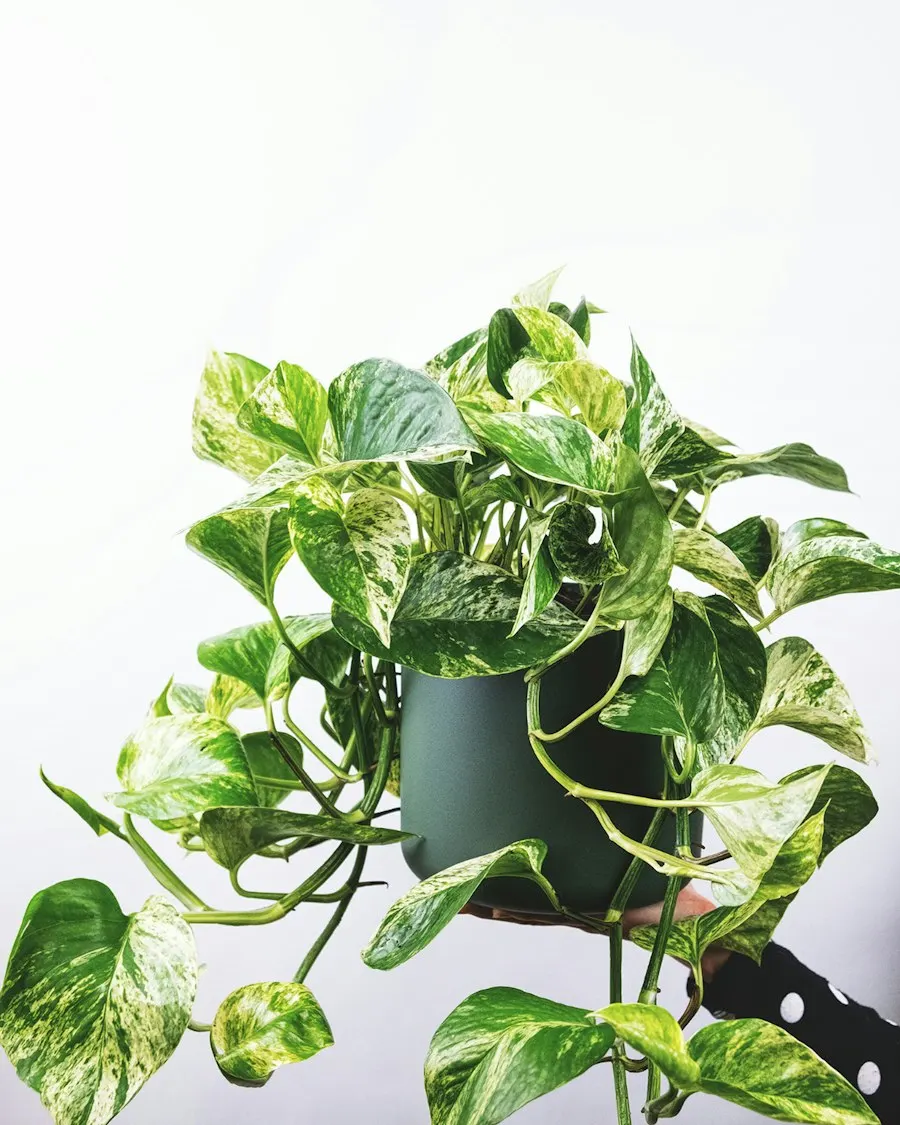
Money plant is the plant most Indian homes already own — on a fridge, trailing from a bookshelf, or climbing a moss pole in a corner. It survives neglect that would kill almost anything else, grows in a bottle of water, and forgives a missed watering. This is the complete Maali Uncle profile for money plant, written in the same 22-field structure as our tulsi profile. Everything here is practical, Delhi-tested common practice; cultural beliefs are marked as beliefs, not facts.
Identity
- Common names: Money plant, pothos, golden pothos, devil's ivy
- Botanical name: Epipremnum aureum
- Family: Araceae (the same family as monstera, philodendron and peace lily)
- Origin: Mo'orea in French Polynesia, in the South Pacific; now naturalised across tropical Asia, including India, where it grows outdoors in warm, humid regions
- Growth habit: evergreen climbing vine; in a pot it typically trails or climbs 1–3 metres, and can grow much longer over years. In the wild it climbs trees and its leaves can grow very large — 30 cm or more — and develop splits
How to identify good money plant
Look for glossy, heart-shaped leaves with clear variegation (on a variegated variety), firm stems, and small brown aerial roots at the leaf joints — those roots are how the plant climbs, and they are also how you propagate it. A healthy plant has dense leaves along the stem, not a long bare vine with leaves only at the tip. When buying, check the undersides of leaves for tiny white insects (mealybugs) and avoid plants with yellowing lower leaves or a sour smell from the pot, which usually means the soil has been kept too wet.
Varieties you will actually find
- Golden: green leaves marbled with yellow — the classic money plant, and the toughest of the lot.
- Marble Queen: heavily variegated in white and green; slower-growing and needs more light to keep its colour.
- N'Joy: smaller leaves with crisp white edges; neat and compact.
- Neon: bright lime-green leaves, almost no variegation; needs bright light or it turns plain green.
- Jade: plain deep green, no variegation — the best choice for a genuinely low-light corner.
- Pearls and Jade, Manjula, Cebu Blue: less common in ordinary nurseries; Cebu Blue has narrow, silvery-blue leaves and a more delicate habit.
Nursery labels vary and are not always reliable — buy by looking at the plant, not the label. For a first plant, Golden or Jade is the most forgiving choice.
Sunlight
Bright, indirect light is best: near a window with a sheer curtain, or a few feet back from a sunny window. Money plant tolerates low light — it will survive in a dim room — but it grows slowly, the leaves get smaller, and variegated varieties gradually turn plain green. Harsh direct afternoon sun scorches the leaves, leaving pale, papery patches. If the variegation is fading, the plant is almost certainly asking for more light; move it closer to a window and the new leaves will show it. For more on matching plants to the light your home actually gets, read our low-light rooms guide.
Water
Moderate, and always by the soil test: water only when the top 2–3 cm of soil feels dry. For a medium pot that is usually about once a week in summer and once a fortnight in winter, but your pot, your light and your room matter more than any calendar. Water thoroughly, until a little runs out of the drainage holes, then empty the saucer — money plant hates sitting in water, and soggy soil is the fastest way to kill it. Yellow leaves, starting from the older ones at the base, are the classic sign of overwatering; if you see them, check the soil and the roots before watering again, and read our overwatering vs underwatering guide.
Money plant also grows well in water alone: a cutting in a bottle or jar will root and live for months or even years. Change the water weekly, keep the container out of harsh sun, and add a very dilute liquid feed once in a while — plain water has no nutrients, so water-grown plants slowly run out of food.
Soil and pot size
Use a light, free-draining mix — our potting-mix guide recipe works well (garden soil/cocopeat + vermicompost + sand or perlite). Pot size: 6–8 inches for one young plant; bigger pots stay wet longer, so do not over-pot a small cutting. Drainage holes are non-negotiable. Terracotta dries faster and suits people who tend to overwater — our pot comparison guide explains the trade-offs. For a climbing plant, give it a moss pole, a coir pole or a trellis; for a trailing plant, a hanging basket or a high shelf. Repot every 1–2 years, or when roots circle the pot or poke out of the drainage holes.
Propagation
Stem cuttings — the easy way. Cut a stem just below a leaf joint (a node), keeping at least one leaf and one node on the cutting. Put it in water or moist potting mix. In water, roots usually appear in 1–3 weeks; in mix, keep it moist and warm. Once roots are a few centimetres long, pot it up. This is one of the easiest plants in the world to propagate, which is why every Indian home seems to have a cutting in a bottle somewhere.
Division. A bushy, multi-stemmed plant can be divided at repotting time — gently separate the root ball into two or three pieces, each with stems and roots, and pot each separately.
Pruning
Pinch or snip the growing tips to encourage branching — a money plant that is never pruned becomes one long vine with bare stems. In spring, cut back leggy vines to a leaf joint; the plant will usually branch from the joint below the cut, and the cuttings root easily. Remove yellow or damaged leaves as you see them. You can trim aerial roots if they bother you, or guide them back into the pot or onto a pole. Never remove more than about a third of the plant at once.
Fertilisation
Light feeding only: a balanced liquid fertiliser at half strength, once a month during the growing season (roughly March to October). None in winter, when growth slows. Overfeeding shows up as brown leaf tips and salt crust on the soil surface — if you see that, flush the pot with plain water and skip the next few feeds. A small top-up of vermicompost in spring is usually enough for a plant that is already growing well; see our compost comparison guide for the differences.
Flowering and harvesting
Money plant very rarely flowers indoors — it is grown for its foliage, and most owners will never see a flower. In the wild, mature climbing plants produce a pale, arum-like flower, but that needs a large, mature plant in warm, humid conditions. There is nothing to harvest: the leaves are ornamental, not food, and the plant is not eaten.
Pests and diseases
Mealybugs — small white cottony clusters in leaf joints — are the most common pest; remove them with a cotton bud dipped in diluted soap or alcohol, and isolate the plant until they are gone. Scale appears as small brown bumps on stems; scrape off and treat the same way. Spider mites show up in hot, dry air as fine webbing and speckled leaves; raise humidity and rinse the leaves. Root rot from soggy soil is the most serious problem — the stem base turns soft and black, and the plant collapses. Prevention (drainage, watering only when dry) matters far more than any cure. For identification and control in detail, read our pest identification guide and our root rot guide.
Seasonal care
Summer (April–June): keep out of harsh afternoon sun, water more often as pots dry faster, and mist occasionally if the air is very dry — though misting is optional, not essential.
Monsoon (July–September): growth is fastest now; watch drainage on outdoor plants, and do not let pots sit in rainwater. A good season for propagation and repotting.
Winter (November–February): growth slows sharply. Water much less, stop fertiliser, and keep the plant away from cold draughts and cold windows. Money plant dislikes cold — below about 10°C it suffers, so in a cold Delhi winter keep it indoors, in the warmest bright spot you have.
Companion plants
Money plant pairs well with other forgiving indoor plants — snake plant, ZZ plant and spider plant all share its tolerance for indoor conditions and make a good mixed display. On a moss pole or trellis it can share a large planter with a philodendron. Avoid crowding it with plants that need very different watering — a money plant in the same pot as a thirsty fern will either be overwatered or the fern will dry out.
Uses
Ornamental first and foremost — trailing from shelves, climbing poles, and softening bare walls. In India it is also widely grown as a symbol of prosperity and good fortune, and is a common housewarming gift; that is a cultural belief, and this guide makes no claim that the plant brings wealth.
On air purification, be honest: money plant is often called an air-purifying plant because of a well-known NASA study, but that study tested plants in small sealed chambers. In a real room, one or two plants make little measurable difference to air quality — open windows and ventilation do far more. Grow it because it is beautiful and forgiving, not because it will clean your air.
Interesting facts
- A money plant cutting can live for years in a bottle of water — one of the few houseplants that truly can.
- In the wild it climbs trees, and its leaves grow huge and develop splits, looking almost nothing like the small leaves on a pot plant.
- It is one of the most forgiving houseplants there is: it survives low light, irregular watering and years of neglect, which is why it is the first plant most Indian homes ever keep.
- The aerial roots at each leaf joint can absorb moisture from the air — in a humid bathroom, they sometimes grow surprisingly long.
Limitations and toxicity
Money plant is mildly toxic if eaten: its leaves and stems contain calcium oxalate crystals, which irritate the mouth, throat and stomach. Keep it away from pets that chew leaves and from small children — it is listed as toxic to cats and dogs. The sap can irritate sensitive skin, so wash your hands after pruning. It is not a food plant and no part of it should be eaten. Beyond that, its limitations are few: it will not thrive in a dark corner, it will not survive a cold winter outdoors in Delhi, and it needs a pole or a shelf to look its best once the vines get long.
Frequently asked questions
Why are my money plant leaves turning yellow? Overwatering is the most common cause — check the soil before watering again, make sure the pot drains, and remove the yellow leaves. Cold draughts and old age (the lowest leaves yellowing one by one) are the other usual reasons.
Why is the variegation fading? Almost always too little light. Move the plant closer to a bright window; new leaves should come through variegated again. Plain-green growth on a variegated plant can be pruned back to encourage variegated shoots.
Can money plant grow in water only? Yes, for a long time — change the water weekly, keep it out of harsh sun, and add a very dilute liquid feed occasionally, since plain water has no nutrients.
How fast does it grow? Fast, in warm, bright conditions — a healthy vine can add a metre or more in a growing season. In low light or winter, growth nearly stops.
Why are the leaf tips brown? Usually dry air, salts from hard water or overfeeding. Use rainwater or rested tap water if you can, and ease off the fertiliser.
Why is my plant leggy, with bare stems? Too little light and no pruning. Move it brighter, cut the bare vines back to a leaf joint, and root the cuttings to fill the pot out again.
Maali Uncle ki gardening guide — ghar par paudhon ki dekhbhal, aasan tareeke se. This profile follows the same 22-field structure as our tulsi profile. Apni jagah ke hisab se salah ke liye Expert Maali book karein.
Is page ko Maali Uncle app mein kholo: app mein kholo