← Maali Uncle website par wapas
Garden Budgeting: What Drives Landscaping Cost in India
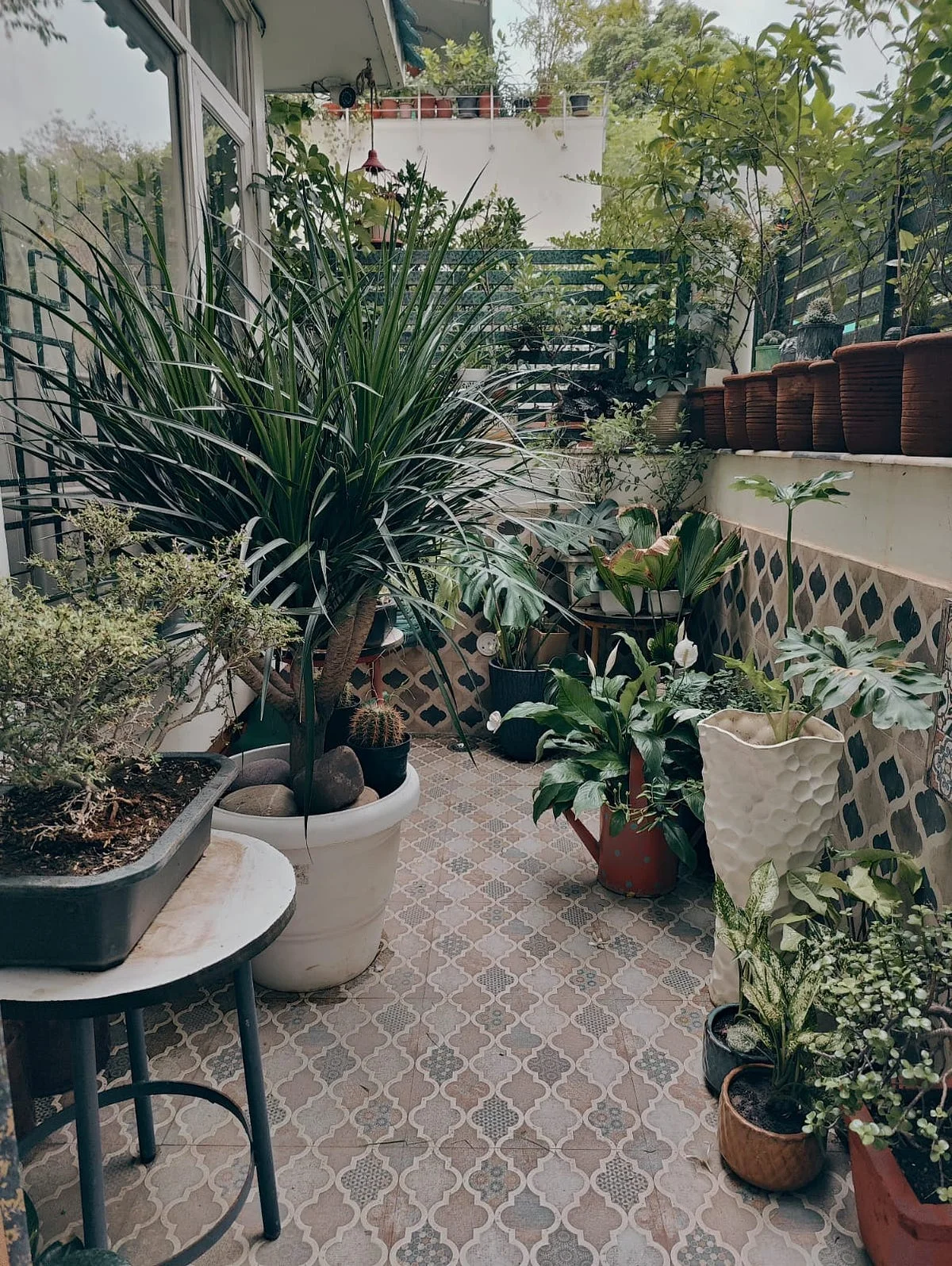
“How much does landscaping cost?” is the first question almost every garden owner asks — and the honest answer is that no one can give you a real number without seeing your site. A small balcony makeover and a housing-society landscape differ by orders of magnitude, and even two gardens of the same size can cost very different amounts depending on what lies under the soil, how much is built versus planted, and how the garden will be watered and maintained afterwards.
This guide explains what actually drives landscaping cost in Delhi NCR, so you can read a quote properly, compare two quotes fairly, and phase the work so the budget survives the garden. It gives you cost factors, not prices — prices change with material, season and site, and any article that quotes a fixed per-square-foot rate for “landscaping” is guessing. Our complete guide to landscaping in India walks through the full process from site survey to handover; this guide is about the money side of that process.
Why there is no single price
Landscaping is not one product. A quote is a bundle of very different kinds of work — design, demolition and site preparation, building (paths, walls, pergolas), soil and drainage, plants, irrigation and lighting, and then maintenance — and each of those is priced differently. A garden that is mostly lawn and shrubs is a different job from a garden with stone paving, a water feature and a pergola, even if both cover the same area.
That is why a per-square-foot rate, on its own, tells you almost nothing. Two quotes at the same rate can cover completely different things. Always ask what is included — and, just as important, what is not.
1. Size — but not in the way people expect
Size matters, but it is not the whole story. A larger garden costs more in total, but the cost per square metre usually falls as the garden gets bigger, because design, site visits and machinery are spread over more area. A very small garden can be surprisingly expensive per square metre, because the fixed costs — design, delivery, a day of labour — do not shrink with the site.
What matters more than raw area is how much of the garden is worked: a large lawn with a few trees is far cheaper to build than a small garden packed with paving, planters, lighting and a pergola. When you describe your garden to a landscaper, describe what you want in it, not just its size.
2. Site condition — what is already there
The condition of your site before work starts is often the biggest hidden cost driver, and it is the one owners most often underestimate.
Rubble and debris. Many Delhi NCR sites — especially new plots and redeveloped houses — have construction rubble, broken concrete and compacted soil under a thin layer of topsoil. Clearing it and bringing in decent soil is real work, and it has to happen before any planting. Our soil preparation guide explains what to check.
Levels and drainage. A site that slopes the wrong way, or that waterlogs every monsoon, needs grading, drainage or both. Fixing drainage after planting costs far more than fixing it first — read our monsoon-proofing guide before you budget.
Access. Can a truck reach the site, or does everything come in by hand through a narrow lane? Can machinery get in, or is it all manual work? Poor access adds labour days, and labour days are money.
What stays. An existing mature tree, a sound boundary wall or a patch of good soil is worth real money — designing around what survives already is almost always cheaper than clearing everything and starting from zero.
3. Design — the cheapest money you will spend
Design is usually a small share of the total, and it is the part that saves the most money. A proper design — a site survey, a plan, a plant list matched to sun and water, and a phased schedule — prevents the expensive mistakes: a tree planted where it will outgrow the space, a lawn where no one walks, irrigation laid after the paving.
A design also makes quotes comparable. Without one, two landscapers are quoting two different gardens, and the cheaper quote may simply be the one that left things out. If your project is more than a few pots and a lawn, pay for the design first and build from it.
4. Hardscape — usually the largest share
Hardscape — everything built rather than planted: paving, paths, edging, retaining walls, pergolas, seating, planters, water features — is usually the largest share of a landscaping budget, because it involves materials, skilled labour and time. A stone path costs far more than the same area of lawn, and a pergola more than a shrub bed of the same size.
This is where budgets are most often blown. Every extra square metre of paving, every built wall and every structure adds cost — and also adds long-term maintenance. Our hardscape vs softscape guide explains how to balance the built and planted parts of a garden, and why a garden that is mostly hardscape is also the hottest and hardest to keep pleasant in a Delhi summer.
The practical rule: decide how much hardscape the garden genuinely needs — paths people walk, a seating area, edges that hold soil in place — and spend the rest of the budget on soil, plants and water, which are what make a garden feel like a garden.
5. Soil, drainage and levelling
Soil work is invisible once the garden is finished, which is why it is the first thing people try to cut — and the most expensive thing to fix later. Good soil, proper levels and working drainage are the foundation everything else depends on: plants in poor, compacted, waterlogged soil die, and replacing them costs more than the soil work would have.
Budget for soil improvement as a line of its own, not as an afterthought: loosening, compost, levelling and drainage. On a bad site this can be a substantial share of the total; on a good site it can be modest. Either way, it is money spent once, while replanting is money spent again and again.
6. Plants — size and maturity cost more than species
Plant cost is driven less by which species you choose than by how big and mature the plants are when they go in. A mature tree costs many times more than a sapling of the same species — and costs more to transport, plant and establish. The same is true of large shrubs and palms.
That is a real choice, not a trick: big plants give an instant garden, small plants give a garden that grows into itself over two or three years. A sensible budget mixes the two — a few key trees and shrubs at a good size for structure and shade, and the rest as younger plants that will fill in. Our guide to choosing landscape plants and our native plants guide explain which species earn their place — natives, in particular, usually cost less to keep alive than thirsty exotics, which matters more than the purchase price over the years.
Ask your landscaper to quote plants by species and size, not as a single lump sum. A lump sum hides the difference between a garden of young plants and a garden of mature ones.
7. Irrigation and lighting
Irrigation and lighting are often quoted as extras, but they shape the running cost of the garden for years. Drip irrigation, planned from the start, uses less water and less labour than hand-watering — and it is far cheaper to lay before planting and paving than to retrofit afterwards. Our water-efficient landscaping guide explains how grouping plants by water need keeps both the installation and the water bill down.
Garden lighting is the same story: a few well-placed lights transform an evening garden, but each light is a fitting, a cable and a connection. Decide how much evening use the garden will genuinely get before budgeting for a full lighting scheme — and read our landscape lighting basics first.
8. Labour, access and timing
Labour is a large share of most landscaping budgets, and it rises with difficulty: poor access, heavy material carried by hand, work in peak summer heat, and rework when decisions change mid-project. The single biggest labour cost is usually change — moving a path after it is laid, replanting after the design shifts, or redoing work because the soil was never prepared. A clear design, agreed before work starts, is the cheapest labour saving there is.
Timing matters too. The monsoon is usually the kindest planting season in Delhi NCR, but it is also when sites are wettest and access hardest; peak summer heat slows work and stresses new plants. A realistic schedule, agreed in advance, avoids paying for work done in the worst conditions.
9. Maintenance — the cost after the cost
The most commonly forgotten cost is the one that never stops: maintenance. Watering, mowing, pruning, feeding, pest checks and replacement planting — most of all in the first year, when everything is establishing. A garden that costs a lot to build and nothing to maintain will quietly lose plants until the gaps are obvious.
Budget maintenance as part of the project, not as an afterthought. Our garden maintenance guide explains what a proper maintenance visit should cover, and how often. As a rough guide, the first year of maintenance — including replacing the few plants that do not establish — is part of the real cost of the garden, and a landscaper who includes an establishment period in the quote is being honest, not expensive.
Phasing: how to spread the cost
Most gardens do not need to be built in one go, and phasing is the most practical way to fit a garden to a budget. The order matters:
Phase 1 — structure. Design, soil, drainage, levels and the hardscape that everything else depends on (paths, retaining, main seating). This is the expensive phase, and it is the one to get right first.
Phase 2 — trees and structure planting. Canopy trees, main shrubs and hedges, planted in the monsoon window where possible. These need time to grow, so they go in early.
Phase 3 — infill and finish. Groundcover, lawn, seasonal colour, lighting and irrigation details, added over the following seasons as the budget allows.
A garden built in this order looks good in its first year and better in its fifth. A garden built in the reverse order — lawn and colour first, trees and drainage later — means digging through your own finished garden.
Where money is usually wasted
Lawn everywhere. A lawn is the thirstiest, most mown, most fed part of any garden. Use it where people actually sit or play, and plant the rest.
Too much hardscape. Paving is expensive to build, hot in summer, and hard to change. Build what you need; plant the rest.
Instant maturity everywhere. Buying every plant at full size costs many times more than buying the structure at size and letting the rest grow in.
Skipping the soil. The invisible saving that becomes a visible, recurring cost in dead plants.
No maintenance budget. The garden that is never watered, pruned or fed properly slowly empties itself — and refilling it costs more than maintaining it would have.
How to get a fair quote
Start with a site visit. No honest quote comes from a photo alone. A landscaper who quotes without visiting has not seen the soil, the drainage, the access or the light — and the price will change when they do. Our guide to choosing a landscaper lists the questions worth asking before you hire.
Ask for an itemised quote. Design, site preparation, hardscape, soil, plants (by species and size), irrigation, lighting, labour and maintenance should be separate lines. An itemised quote lets you compare fairly, and lets you phase or trim without guessing.
Get two or three quotes, on the same design. Quotes for different designs are not comparable. Give every landscaper the same plan and the same plant list, and compare line by line — the cheapest total is not the best value if it leaves out the soil work or the establishment care.
Check what is excluded. Water connection, electrical work, debris removal, GST, and the first year of maintenance are commonly excluded. An exclusion is not a trick — but it should be written down, not discovered later.
Agree the establishment period. Who waters, who replaces plants that fail in the first season, and for how long? Get it in writing. A garden is not finished at handover; it is finished when it is established.
Frequently asked questions
Can I get a ballpark figure before a site visit? Only a very rough one, and only for a garden very like one the landscaper has already built. Treat any number given without a visit as a starting point for a conversation, not a quote.
What usually costs the most? In most Delhi NCR gardens, hardscape — paving, walls, pergolas and structures — takes the largest share, followed by site preparation and soil work on a poor site. Plants are often a smaller share than people expect, but their maintenance is ongoing.
Is it cheaper to do it myself? For a small balcony or a few beds, often yes. For a full landscape — levels, drainage, hardscape, trees — the cost of mistakes (a tree in the wrong place, a lawn that waterlogs, paving that has to be relaid) usually outweighs the saving. A middle path works well: a professional design and structure, with you doing the planting and seasonal colour.
Can I landscape in stages on a tight budget? Yes — structure and soil first, trees second, infill over following seasons. It is the most sensible way to build a garden, and most good landscapers will plan it with you.
If you would like help budgeting your own garden, book an Expert Maali — we start with a site visit and a plain, itemised explanation of what your space needs, before any design or quote. For larger projects, our Landscaping Division works on gardens, societies and institutions across Delhi NCR.
Is page ko Maali Uncle app mein kholo: app mein kholo