← Maali Uncle website par wapas
Complete Guide to Landscaping in India
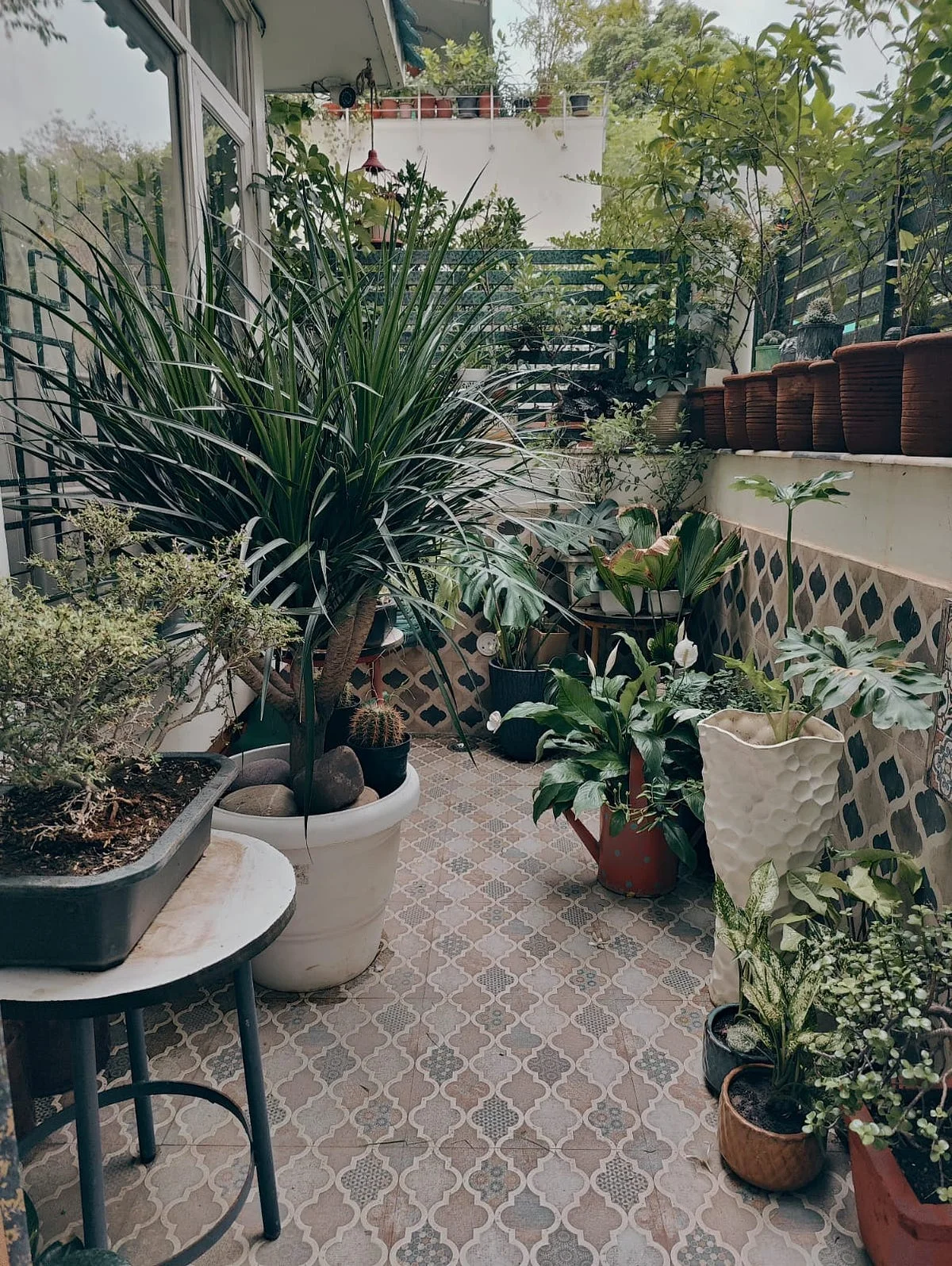
Landscaping is not buying plants and placing them around a house. It is the design, building and care of an outdoor space as one working system — soil, water, paths, shade, planting and maintenance, all planned together so the garden still looks good in its third summer, not just on the day it is finished. This guide explains what landscaping actually includes, how a project works, and how to plan one that suits Indian sun, soil, water and monsoons.
It is written for homeowners, societies and businesses in Delhi NCR, but the principles apply across North India. Where a topic has its own guide, we link to it instead of repeating it.
What landscaping actually includes
A landscape has two halves. Softscape is the living part: soil, plants, trees, lawns and planting beds. Hardscape is the built part: paths, walls, paving, decking, pergolas and drainage. Between them sit water (irrigation and drainage), light, and the maintenance plan that keeps all of it alive. A project that only does the softscape — plants with no paths, no drainage and no watering plan — is not landscaping; it is shopping. Our hardscape vs softscape guide explains how the two halves balance.
Start with the site, not the catalogue
Every good landscape begins with a site visit, not a plant list. Sun through the day, soil type, drainage, water supply, wind, existing trees and how people move through the space — these decide what will thrive and what will fail. A plant that looks perfect in a nursery catalogue can be wrong for a west-facing Delhi terrace that bakes every May afternoon. The honest sequence is: assess the site, then choose the design, then choose the plants. Soil deserves its own attention — see our soil preparation guide before anything goes into the ground.
The stages of a landscaping project
Our projects follow thirteen stages: enquiry, site visit, site assessment, concept design, detailed planning, estimation, client approval, procurement, site preparation, execution, quality inspection, handover and maintenance. The stages matter because the expensive mistakes happen early — a wrong plant choice, a missed drainage problem, a design nobody agreed in writing. The full process is described on our Landscaping Division page, and every project gets a written estimate before work begins.
Choosing plants for Indian conditions
Three rules govern plant choice. First, climate fit: a plant must survive your hottest May and your coldest January, not just the pleasant month it was bought in. Second, mature size: trees and shrubs are bought small and grow large — a tree planted two feet from a wall becomes a problem, not a feature. Third, maintenance reality: a plant that needs daily attention will not get it in a busy household or a commercial building. Native and climate-adapted species usually win on all three counts. For small spaces, see low-maintenance balcony gardening and vertical gardening at home; for low-light interiors, plants for low-light rooms.
Water: plan it before you plant
Water is the most common reason Indian landscapes fail — too little in summer, too much in the monsoon, and no plan for either. Water-efficient landscaping is decided at the planning stage: grouping plants by thirst (hydrozoning), sizing lawns to the water available, designing drip zones for beds and trees, and planning drainage for the monsoon. Our water-efficient landscaping guide covers the site-scale decisions; for pots and balconies, the fifteen water-saving changes apply instead.
What landscaping costs — honestly
There is no standard rate card, because no two sites are the same. Cost depends on site size, scope, materials, planting, irrigation and access — a small balcony and a society central green are different projects, not different sizes of the same one. What we can promise is process: a site visit, a site assessment, and a written estimate before any work begins, with scope, materials and charges agreed in writing. If someone quotes a landscape without seeing the site, that quote is a guess. See our Landscaping Division page for how to start.
Hiring help: questions to ask
Before hiring any landscaper — us or anyone else — ask five questions. Will you visit the site before quoting? A quote without a visit is a guess. What is included, and what is separate? Design, drawings, procurement, civil work, irrigation and planting labour are often separate items. How do you handle drainage and waterproofing? The answer should be specific to your site, not a slogan. What happens after handover? A garden without a maintenance plan is a garden with an expiry date. Can I see the estimate in writing before work begins? If the answer is no, walk away.
Maintenance: the part people forget
The first season after planting is the most important one: watering as roots establish, pruning as plants settle, and replacing anything that fails to take. After that, a landscape needs a rhythm — pruning, lawn care, irrigation checks and seasonal planting — agreed in advance, not improvised. Maintenance can be arranged for landscapes we installed and for gardens we did not. See landscape maintenance & AMC.
Where to start
Start with the space you have. For homes, see residential landscaping; for terraces, rooftop & terrace gardens — and read our rooftop structural guide before planning anything heavy upstairs. Then share your property type, location and approximate area with us on WhatsApp or through the enquiry form, and we will arrange a site visit.
FAQs
How long does a landscaping project take? It depends on size and scope — a balcony takes days of work, a society landscape takes phased work over a longer period. Timelines are agreed in writing after the site assessment; we do not quote durations before seeing the site.
Can landscaping be done in phases? Yes, and for larger sites it usually should be. Phasing lets the most-used areas come first and spreads the work sensibly.
Do you work outside Delhi NCR? Delhi NCR is our service area. Sites outside it are confirmed on enquiry.
Want a landscape planned for your site — sun, soil, water and all? Visit the Landscaping Division or book an Expert Maali for a site visit.
Is page ko Maali Uncle app mein kholo: app mein kholo