← Maali Uncle website par wapas
Sunflower Microgreens Growing Guide: Soak, Weight, Blackout and Harvest
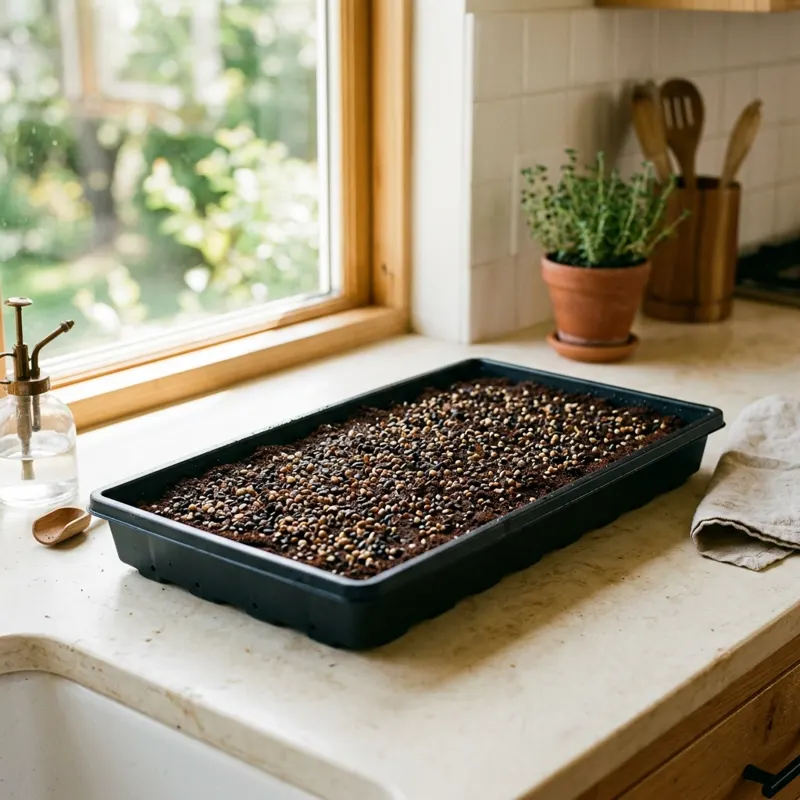
Sunflower microgreens are the nutty, crunchy favourite of home growers — thick stems, broad cotyledons and a mild flavour that works in salads, sandwiches and wraps. They ask for a little more than radish or mustard: a soak, a few days under weight in the dark, and attention to hulls and mould. Get those steps right and a tray is ready in about a week to ten days. This guide covers each step. For the general method, see the full tray method; for choosing your first seeds, see best microgreen seeds for beginners.
Quick answer
- Seed: food-grade, untreated sunflower seed sold for sprouting or microgreens — never seed dressed with fungicide or chemicals.
- Soak: about 8 to 12 hours in clean water, then rinse and drain well.
- Sow: a single even layer on moist cocopeat or fine potting mix, in a shallow tray.
- Blackout: cover with a second tray and add a little weight for 2 to 3 days, until the shoots push the cover up.
- Light: bright indirect light once uncovered; avoid harsh direct sun.
- Harvest: about 7 to 10 days after sowing, when the shoots are roughly 7 to 10 cm tall and the first true leaves are just opening.
Step 1 — The seed matters most
Sunflower fails more often from bad seed than from bad technique. Buy black oil sunflower seed sold for sprouting or microgreen use, food-grade and untreated. Striped sunflower seed sold for birds or snacking is a poor choice — germination is uneven and the hulls are harder to shed. Check the packet for a packing date and buy small quantities first; old seed germinates slowly and moulds more easily. Store seed cool, dry and airtight.
Step 2 — Soak 8 to 12 hours
Rinse the seed, cover it with clean water, and soak for about 8 to 12 hours — overnight works well. After soaking, rinse again and drain thoroughly; seed left sitting in water goes sour. A short soak wakes the seed up and evens out germination. Much longer than twelve hours adds little and raises the risk of rot, especially in warm Indian weather.
Step 3 — Sow in a single layer
Fill a shallow tray (3 to 5 cm deep) with moist cocopeat or a fine, sieved potting mix, level it, and scatter the soaked seed in a single even layer — close together but not piled in heaps. Mist the surface lightly, then place a second tray or a board on top. The cover keeps the seed dark and moist while it germinates.
Step 4 — Weight and blackout, 2 to 3 days
Place a light weight on the cover — a book or a second tray with a little weight in it is enough. The weight presses the seed into the medium so roots grip, and it keeps the shoots short and sturdy. Check daily: after 2 to 3 days the shoots will have pushed the cover up. Do not leave the weight on longer than needed — once the cover lifts, the blackout is over.
Step 5 — Light and water
Move the tray to bright indirect light — a bright windowsill out of harsh direct sun, or a shaded balcony shelf. Water from below where possible: set the tray in a shallow dish of water for a few minutes and let the medium draw it up, then drain. Watering from above every day wets the leaves and invites mould. In hot weather, check the medium morning and evening; a tray that dries out mid-day stalls and toughens.
Hulls: what to do when they stick
Sunflower hulls often cling to the leaves. Most fall off on their own as the shoots grow and dry in the light — a gentle mist and a day of light usually finishes the job. You can pick off the stubborn ones by hand at harvest, but do not force them early: pulling a stuck hull can tear the leaf. Hulls left on the tray at harvest are harmless; hulls in the salad are not pleasant, so take a minute to pick them before cutting.
Mould: prevention beats cure
Mould is the main reason sunflower trays fail, and it comes from the same conditions the seed likes: warm, damp and still air. Prevent it with clean trays, fresh medium, drained seed, and air movement — a tray on a breezy windowsill moulds far less than one in a closed, humid corner. If a small patch of white fuzz appears, improve airflow, water from below only, and remove the worst-affected patch. A tray that smells sour or is heavily moulded should be composted and started again — it is not worth eating from.
Step 6 — Harvest at 7 to 10 days
Harvest when the shoots are about 7 to 10 cm tall, the cotyledons are open and green, and the first true leaves are just beginning to show. Cut with clean scissors just above the medium, rinse gently, and use the same day if you can — sunflower microgreens keep a day or two in the fridge in a dry container, but they are best fresh. Leaving them longer makes the stems tough and the flavour stronger; harvesting too early wastes the growth you waited for.
FAQs
Why are my sunflower shoots pale and leggy? Usually too long in the dark, or too little light after uncovering. Lift the cover as soon as the shoots push it up, and give bright indirect light from day one after blackout.
Can I grow sunflower microgreens without weight? You can, but the shoots are often weaker and the roots grip poorly. A light weight for the first two days is worth it.
Do I need to remove the hulls before eating? Pick off the loose ones at harvest. A few hulls are harmless, but they are not pleasant to eat.
Grown your first tray? Try radish microgreens for a faster, peppery contrast, or read what microgreens are for the full picture.
Is page ko Maali Uncle app mein kholo: app mein kholo