← Maali Uncle website par wapas
What Are Microgreens? A Beginner Explainer for Indian Homes
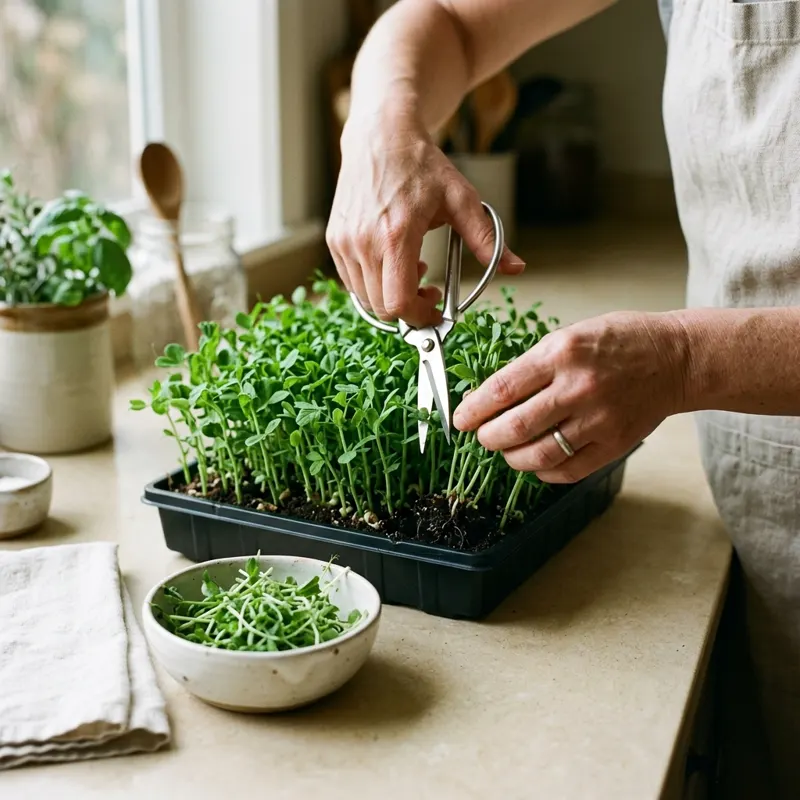
Microgreens are young seedlings, harvested when the first true leaves are just emerging — usually 7 to 21 days after sowing, depending on the crop. They are not sprouts, and they are not baby salad leaves either. They grow on a windowsill in a shallow tray, need no garden, and go from seed to garnish faster than almost anything else you can grow at home. That speed is exactly why beginners love them — and why a few honest rules matter before you start.
Microgreens, sprouts and baby leaf — the difference
Sprouts are germinated in water or high moisture, eaten whole — seed, root and shoot — usually within a few days. Because they grow wet, they need strict hygiene. Microgreens grow in a shallow tray of medium, are cut above the medium once the cotyledons (seed leaves) have opened and the first true leaves appear, and the roots and medium are left behind. Baby leaf is a later stage — larger leaves harvested after more growth, grown more like an ordinary leafy vegetable. The three are different foods, grown differently, and the safety rules are not interchangeable.
Why they fit Indian homes
A tray fits on a bright windowsill, a balcony shelf or a kitchen counter. The cycle is short — a tray sown on a Sunday can be harvested within one to three weeks — so a failed tray costs little and teaches fast. They add fresh flavour and colour to everyday meals: peppery radish, nutty sunflower, sweet pea shoots, aromatic coriander. Stagger two trays a few days apart and you harvest in small batches instead of getting one glut. Our Microgreens section shows the setup and the starter kit.
The beginner set
Start with the forgiving crops: radish and mustard for speed and spice, methi (fenugreek) for its familiar aroma, and sunflower for crunch. These are the varieties already named in our Microgreens section, and each gets its own growing guide in the Diary over time. Save slower or fussier crops — basil, amaranth, coriander — for your second or third tray, once you know how your windowsill light and watering rhythm behave.
How a tray works, in brief
Use food-grade, untreated seed sold for sprouting or microgreen use — never seed treated with fungicide or chemical dressing. Sow evenly in a clean tray of moist medium, at a density that leaves room for air to move; overcrowding invites mould. Give bright light after emergence, water gently from below or with a fine mister, and keep air moving around the tray. Harvest with clean scissors, cutting above the medium. Wash and chill promptly, and eat within a few days. A full tray-method guide follows in the Diary; this is the shape of it.
Nutrition: what can honestly be said
Microgreens can contain vitamins, minerals and phytochemicals — but how much depends on the species, the cultivar, the seed lot, the growing medium, the light, the temperature and the harvest age. That is why honest claims stay modest: microgreens are a fresh, flavourful way to add a variety of young greens to meals. They are not a substitute for a balanced diet, and no single microgreen should be sold as a cure, a detox or a guaranteed immunity booster. One claim deserves a hard line: ordinary plant foods, microgreens included, are not reliable sources of Vitamin B12 — do not believe any product that says otherwise.
Food safety is part of growing
Microgreens are eaten raw, so hygiene is a growing step, not an afterthought. Use clean, traceable seed and potable water, clean trays and scissors before each sowing, keep pets and soil splash away from the trays, and give the tray airflow — persistently soggy medium grows mould, and a mouldy tray should be discarded, not salvaged. Keep the harvest cold and eat it fresh; a tray that smells off is a tray to throw away.
FAQs
Are microgreens the same as sprouts? No. Sprouts are eaten whole after a few days in wet conditions; microgreens are cut above the growing medium after one to three weeks. Different method, different food, different safety rules.
Do I need special grow lights? Usually not to start. A bright windowsill with a few hours of indirect sun grows most beginner varieties; if seedlings stretch pale and leggy, they need more light.
How long do harvested microgreens keep? A few days, chilled in a clean, dry container. Harvest only what you will use, and keep the rest growing in the tray.
Can I cut them and let them regrow? Generally no — most microgreens give one harvest per sowing. Sow a fresh tray instead of waiting for regrowth that rarely comes.
What do I need to start? A shallow tray with drainage, a growing medium, food-grade seed and a mister — see the Microgreens section and the complete kitchen gardening guide for the wider kitchen-garden picture.
Want microgreens set up on your windowsill? Book an Expert Maali — a short visit saves a season of wrong trays.
Is page ko Maali Uncle app mein kholo: app mein kholo