← Maali Uncle website par wapas
Best Microgreen Seeds for Beginners: 5 Easy First Crops
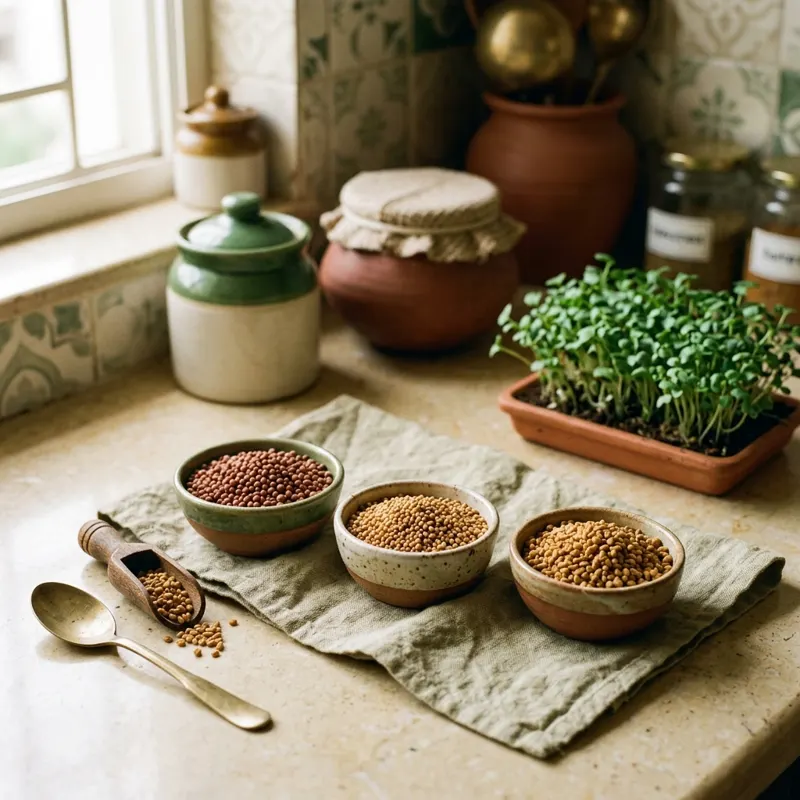
Microgreens are the easiest first crop in Indian home gardening — but only if the seed is right. A beginner does not need rare varieties or expensive kits. What matters is seed that germinates fast, forgives small mistakes, and grows into something you actually want to eat. This guide picks the five best first seeds, explains why they work, and warns you off the ones that frustrate beginners. If you are new to the idea itself, start with our explainer What Are Microgreens?, then follow the full tray method for the steps.
Quick answer
- Start with: radish, mustard, methi (fenugreek), pea shoots and sunflower.
- Hold off on: coriander (slow, uneven germination), basil (mucilaginous seed needs a different sowing method), amaranth (very small seed, fussy about light and temperature).
- Buy: food-grade, untreated seed sold for sprouting or microgreen use — never seed dressed with fungicide or chemicals.
- First buy: small packs of two or three varieties. Learn the method before stocking up.
1. Radish — the fastest win
Radish is the crop to grow first. It germinates in a day or two, grows fast, and is usually ready to cut in about five to seven days. The flavour is peppery and bright, the stems often blush pink, and it works in salads, sandwiches and as a garnish. It needs no soaking and tolerates a missed watering better than most. Our radish microgreens guide covers sowing, the short blackout period and the harvest window in detail.
2. Mustard — peppery and reliable
Mustard seed is cheap, widely available in Indian kitchens and shops, and germinates quickly and evenly. The greens are peppery — stronger than radish, so a little goes a long way in a salad. Make sure you buy the right species sold for sprouting or microgreen use, and food-grade seed: ordinary spice mustard from a kirana shop can work, but check it is untreated and fresh, and expect germination to vary with the batch. Old seed germinates poorly whatever the variety.
3. Methi (fenugreek) — familiar aroma, honest flavour
Methi seed is in nearly every Indian kitchen, which makes it the easiest seed to try first — but it is not the easiest to grow well. It carries the distinctive methi aroma and can taste bitter if harvested late or grown too warm. Soaking times vary by method, so follow the tray method and harvest young, when the first true leaves are just opening. Grow it because you like the flavour, not because it is effortless.
4. Pea shoots — sweet and tender
Pea shoots are the gentle one: sweet, tender and mild, the best choice for children and for anyone who finds radish and mustard too sharp. They need a little more room and support than the small-seeded crops, and the harvest stage varies — cut when the shoots are young and tender, before they turn tough. Buy seed sold for shoots or sprouting, not dried peas meant for cooking, which may be treated or old.
5. Sunflower — nutty crunch, with one warning
Sunflower microgreens are nutty and crunchy, and a favourite once you have the method down. They need a soak of about eight to twelve hours before sowing, a few days under cover with weight, and attention to mould and stuck hulls. That makes them a second-tray crop rather than a first: try radish or mustard first, then sunflower. Our sunflower microgreens guide walks through the soak, blackout and hull steps.
Seeds to hold off on
Coriander: aromatic and worth growing later, but germination is slow and uneven, and poor seed quality shows up fast. Basil: the seed turns mucilaginous when wet, so it needs a different sowing method and more patience. Amaranth: mild and colourful, but the tiny seed is sensitive to light and temperature. Wheatgrass: a separate category — juice and fresh cut — with strict hygiene and mould monitoring. None of these are bad crops; they are simply bad first crops.
Buying seed honestly
Buy food-grade, untreated seed from a supplier that sells seed for sprouting or microgreen use, and check the packet: variety name, packing date, and whether it is treated. Seed dressed with fungicide or chemicals must never be grown for eating. Small packs first — a 100-gram pack of radish or mustard sows many trays, and fresh seed germinates far better than seed that has sat in a warm kitchen for a year. Store seed in a cool, dry, airtight container away from sunlight. If a batch germinates poorly, the seed is usually the reason, not your method — try a fresh batch before changing everything else.
FAQs
Can I use kitchen spice seeds? Sometimes. Methi and mustard from the kitchen can work if they are untreated and fresh, but germination varies and some spice seed is heat-treated. For your first trays, food-grade seed sold for sprouting is the safer bet.
How much seed do I need per tray? It depends on the seed — small seeds like radish and mustard sow thinly and evenly across the tray, large seeds like sunflower and pea need a single even layer with a little space. The variety guides give ranges; start light and adjust next time.
Which one should I grow first, if I pick only one? Radish. It is the fastest, most forgiving, and it teaches you the whole method — sow, cover, light, water, cut — in under a week.
Ready to sow? Follow the full tray method, or browse our Microgreens section for the starter set and beginner varieties.
Is page ko Maali Uncle app mein kholo: app mein kholo