← Maali Uncle website par wapas
Microgreens vs Sprouts: What Is the Difference, and Which Should You Grow?
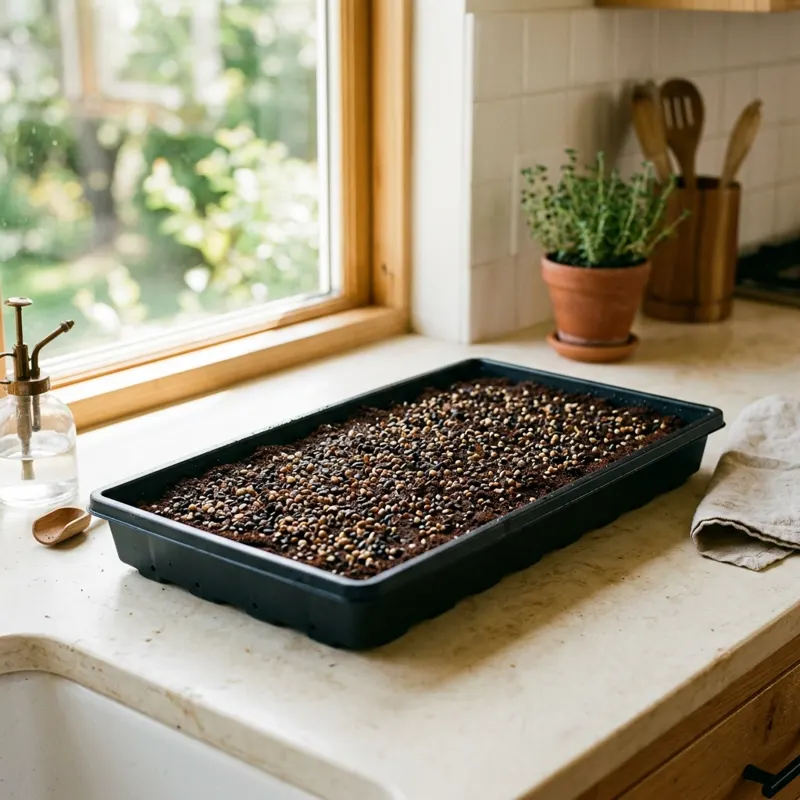
Microgreens and sprouts are often sold side by side and talked about as if they were the same thing. They are not. Both are young plants you eat, but they are grown in completely different ways — one in light, on a growing medium, and cut above the soil; the other in the dark, in water, and eaten whole, root and all. That difference decides how they taste, how long they take, and — most importantly — how carefully you need to handle hygiene. This guide compares them honestly, so you can choose the right one for your kitchen. If you are new to microgreens entirely, start with What Are Microgreens? and the full tray method.
Quick answer
- Microgreens: seeds sown on a growing medium (cocopeat or potting mix), grown in light, and cut above the medium when the first true leaves appear — usually 5 to 14 days. You eat the stem and leaves, not the root.
- Sprouts: seeds soaked and rinsed in water, grown in the dark in a jar or sprouter, and eaten whole — seed, root and shoot — usually in 2 to 5 days.
- Key difference: microgreens grow like tiny plants; sprouts germinate like seeds waking up. Microgreens need light, air and a medium; sprouts need water, warmth and rinsing.
- For a beginner: microgreens are the safer first crop, because they grow in light and air with the roots left behind in the medium.
The comparison at a glance
Growing medium: microgreens grow on cocopeat, potting mix or a mat; sprouts grow in water alone, with no medium at all. Light: microgreens need bright indirect light after germination — that is what turns them green; sprouts are usually grown in the dark or very low light. What you eat: microgreens are cut above the medium, so you eat stem and leaves only; sprouts are eaten whole, including the root and the seed coat. Time: sprouts are faster (2 to 5 days); microgreens take longer (about 5 to 14 days, depending on the variety). Flavour: microgreens taste like a concentrated version of the mature plant — peppery radish, nutty sunflower, familiar methi; sprouts taste milder and fresher, closer to the seed itself. Equipment: microgreens need a shallow tray and a medium; sprouts need a jar, a cloth or a sprouter and a place to drain.
How the methods differ, step by step
Microgreens: sow seed on moist medium, cover for a day or two until germination, then uncover into bright light, water from below, and cut with clean scissors when the first true leaves open. The roots stay in the tray and are composted. Our tray method covers this in full, and the best seeds for beginners guide picks the forgiving first crops — radish, mustard, methi, pea shoots and sunflower.
Sprouts: soak the seed for several hours, drain, then rinse and drain two or three times a day in a jar kept out of direct light, until the sprout is the length you want. There is no medium, no light stage and no cutting — the whole sprout is rinsed and eaten. Moong and moth beans are the familiar Indian examples; the method is the same one used for sprouting dal at home.
Safety: the part that matters most
This is where the two crops genuinely differ, and it is worth being straight about it. Sprouts grow in warm, damp, dark conditions — exactly the conditions in which bacteria can multiply quickly if hygiene slips. That is why sprouts carry stricter handling rules: use clean, food-grade seed sold for sprouting, rinse with clean water two or three times a day, drain fully every time (standing water is the main risk), keep jars and cloths clean, and eat sprouts fresh — do not store a batch for days. People who are pregnant, very young, elderly or unwell should be more cautious with raw sprouts, and should ask their doctor if unsure.
Microgreens are grown in light and air, watered from below, and cut above the medium, so the harvested part has had far less contact with warm, stagnant water. They still need clean trays, fresh medium and clean water, and they should be rinsed before eating and used fresh — but the hygiene burden is lighter, which is one reason they are the better first crop for most homes. Neither crop should be grown from seed dressed with fungicide or chemicals; buy food-grade, untreated seed sold for sprouting or microgreen use.
Which should you grow?
Grow microgreens first if you want flavour, colour and a forgiving method — radish is ready in five to seven days and teaches you the whole process. They suit salads, sandwiches, garnishes and chaat, and a tray gives you a visible, satisfying harvest. Grow sprouts if you want the fastest result with the least equipment — a jar and moong dal are enough — and you are happy to rinse carefully twice a day. Many Indian homes grow both: sprouts for everyday dal and salads, microgreens for flavour and variety. There is no rule that you must choose one.
FAQs
Are microgreens just older sprouts? No. They are grown differently from the start — on a medium, in light — and harvested differently. A sprout left to grow longer in a jar does not become a microgreen; it becomes a leggy, unhappy sprout.
Can I eat the roots of microgreens? The usual practice is to cut above the medium and eat stem and leaves. The roots stay in the tray. Eating the roots is not standard practice, and the medium is not food.
Which is more nutritious? Both are young plants eaten fresh, and their nutrition depends on the seed and the growing conditions. Honest answer: neither has a single reliable number that applies to every tray, and claims that one is dramatically better than the other are usually marketing, not evidence. Grow them for fresh flavour and variety, not for a number.
Do sprouts need sunlight? No — sprouts are grown out of direct light. A little indirect light at the end can green them up slightly, but light is not part of the method the way it is for microgreens.
Ready to start? Sow your first tray with the radish microgreens guide, or read what microgreens are for the full picture.
Is page ko Maali Uncle app mein kholo: app mein kholo