← Maali Uncle website par wapas
Making Compost from Kitchen Waste: A Balcony-Safe Method That Does Not Smell
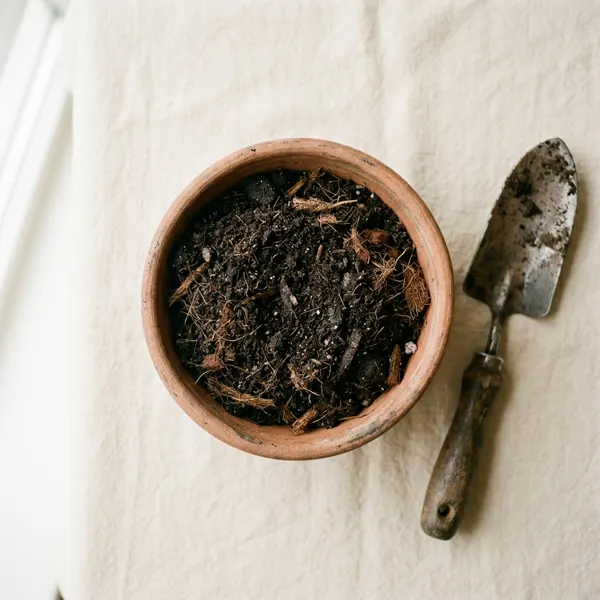
Every Indian kitchen throws away the raw material for good compost, every single day — vegetable peels, tea leaves, eggshells, fruit skins. A small balcony bin turns that waste into dark, crumbly food for your pots, and it costs almost nothing. The reason most home compost attempts fail is not the method: it is the mix. Too much wet kitchen waste and too little dry material, and the bin turns into a smelly, soggy mess. Get the balance right and it smells like damp earth.
Start with the right bin
You do not need a fancy composter. A terracotta or plastic pot with drainage holes, an old bucket with holes drilled in the sides and bottom, or a small purpose-made compost bin all work — what matters is air flow and drainage. Keep the bin in a corner of the balcony that gets some sun and stays out of heavy rain. Put a tray or an old plate under it to catch drips, and keep a lid on: a lid keeps flies out, keeps rain from soaking the mix, and keeps the heat in. A bin the size of a medium bucket suits a family kitchen; a bigger household can run two bins in rotation, filling one while the other matures.
The one rule: green and brown, in balance
Compost needs two kinds of material. Greens are wet and nitrogen-rich: vegetable peels, fruit skins, tea leaves and coffee grounds, fresh grass clippings, wilted greens. Browns are dry and carbon-rich: dry leaves, shredded newspaper or cardboard, sawdust, cocopeat, straw. The practical rule is simple: for every handful of kitchen waste you add, add roughly two handfuls of dry brown material on top. The browns absorb the moisture, keep air in the pile, and are the main reason a good bin does not smell. If you remember only one sentence from this guide, remember that one.
The method, step by step
- Layer 1 (bottom): a few centimetres of dry leaves or cocopeat, so liquid drains and air can enter from below.
- Add kitchen waste in small pieces: chop peels and skins into small bits — small pieces break down far faster than whole ones.
- Cover every green layer with browns: dry leaves, shredded paper or a little cocopeat, every single time. An uncovered layer of peels is what attracts flies.
- Sprinkle a little soil or old compost: a handful introduces the microbes that do the breaking down. A spoonful of curd water or buttermilk now and then helps too, though it is not essential.
- Keep it damp, not wet: like a wrung-out sponge. If water drips when you squeeze a handful, add browns. If it feels dusty dry, sprinkle water.
- Turn it once a week: a quick stir with a stick or old spoon lets air in and speeds everything up. A bin that is never turned goes slow and slimy.
Finished compost is ready when it is dark, crumbly, smells like earth, and you cannot recognise what went in. In Indian weather that usually takes two to three months in a small bin, faster in summer, slower in winter. Sieve it if you like — the chunky bits go back in as the starter for the next batch.
What never goes in
- Cooked food, oil and ghee: they go rancid, smell, and attract rats. Only raw fruit and vegetable waste.
- Meat, fish, dairy and bones: same reason — smell and pests. A balcony bin is not the place for them.
- Diseased plants and weed seeds: a small home bin does not get hot enough to kill them. Bag diseased material and dispose of it instead.
- Glossy or plastic-coated paper, and anything with plastic in it: only plain newspaper and cardboard.
- Citrus peels in large quantities: a few are fine, but a bin full of orange peels turns acidic and slows the microbes down.
Smell and pest troubleshooting
It smells sour or like rotten eggs: too wet, too much green, not enough air. Add a generous layer of dry leaves or shredded paper, stir it well, and leave the lid slightly ajar for a day. It smells of ammonia: too much nitrogen — again, more browns, and stop adding kitchen waste for a few days. Fruit flies: the top layer is exposed greens. Cover with browns, and bury fresh waste under the surface instead of leaving it on top. Ants: usually means the pile is too dry — sprinkle water and turn it. Nothing is happening after weeks: the mix is probably too dry or too cold, or the pieces are too big. Chop finer, add moisture, and turn weekly. A bin that smells like a forest floor after rain is a bin doing its job.
Using your compost
Mix finished compost into potting mix at roughly one part compost to three or four parts mix, or spread a thin layer on top of pots as a mulch-like top dressing every month or two in the growing season. It is a soil improver first and a mild feed second — for the difference between compost, vermicompost and manure, see our compost, vermicompost and manure guide, and for the simplest way to make the worm version, our What Is Vermicompost? guide. If a white fuzz appears on the surface of a compost-rich pot, it is usually harmless mould — our white fungus guide explains when to worry and when not to. And if you are setting up the balcony itself, start with our balcony garden guide and the complete kitchen gardening guide.
FAQs
Will composting on a balcony smell and bother the neighbours? A balanced bin smells like damp earth, not garbage. Smell is almost always a sign of too much wet waste and too little brown material — fix the mix, not the bin. Can I compost in a flat with no balcony? A small bokashi-style or vermicompost setup works indoors, but an open aerobic bin needs outdoor air — a shared terrace corner or a sunny window ledge with a small lidded bin is the minimum. Do I need worms? No — ordinary composting works without them. Worms (vermicompost) are a faster, richer variant, not a requirement. Can I use compost on vegetables? Yes, once it is fully mature — dark, crumbly, earthy-smelling, with nothing recognisable left. Wash every harvest well, as always. How much waste does a family make? A typical family kitchen produces enough peels and leaves for a bucket-sized bin; if you run out of browns, dry leaves from a park or shredded newspaper fill the gap.
Want your balcony compost set up properly, with the right bin for your space? Book an Expert Maali — we match the method to your kitchen, your balcony and your routine.
Is page ko Maali Uncle app mein kholo: app mein kholo