← Maali Uncle website par wapas
Reservoir-Based Irrigation Systems: How Stored Water Keeps Plants Alive Between Waterings
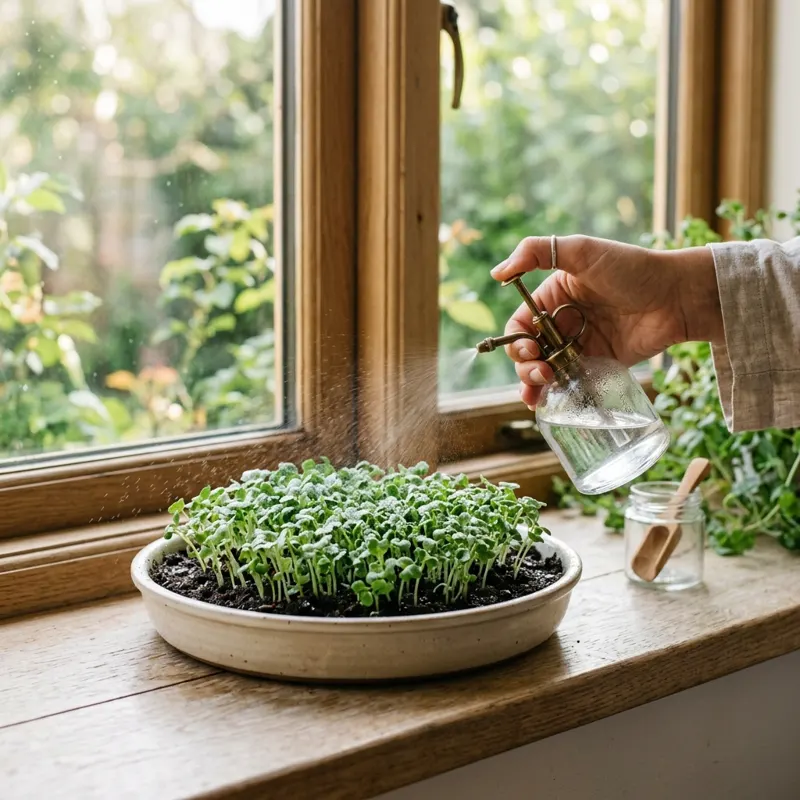
Some plants die because they are forgotten for a week. A holiday, a busy month, a heatwave — and the pots dry out completely. Reservoir-based irrigation exists for exactly that problem: a store of water under or beside the soil, and a way for the soil to draw from it slowly, so the plant drinks when it needs to rather than when someone remembers to water.
The idea is old — clay pots buried in the soil have watered gardens for centuries — and it now appears in forms from a simple self-watering pot to a wicking bed on a terrace. This guide explains how these systems work, where they help, and where they go wrong. It is educational: Maali Uncle’s own water-harvesting reservoir planter is still in development, and nothing in this guide is a product for sale.
How a reservoir system works
Every reservoir system has two parts: a store of water, and a connection that lets the soil take water from it. The connection works by capillary action — the same force that pulls water up a wick or a paper towel. Dry soil pulls water up through a wick, a capillary mat or a porous clay wall; wet soil pulls less, so the flow slows on its own. That self-regulation is the whole point: the plant’s soil decides how much it takes.
Our guide to how self-watering planters work explains the same principle at the scale of a single pot — this article covers the wider systems built on it.
Four types, from a pot to a bed
1. Self-watering pots. A pot with a hidden tank underneath and a wick or a soil column reaching down into it. Fill the tank, and the soil draws water up for a week or two. Best for indoor plants and herbs that like steady moisture. Keep the tank topped up and clean it occasionally.
2. Wicking beds. A raised bed with a water reservoir at the bottom — usually gravel or a liner holding water — and soil above it, separated by a layer that lets water wick up. A wicking bed can water itself for weeks and suits vegetables on a terrace, but it is heavy when full, so check the structure before building one up high — see our rooftop structural considerations.
3. Olla pots. Unglazed clay pots buried in the soil with only the neck showing. Fill the pot, and water seeps slowly through the clay walls into the surrounding soil. One of the oldest and simplest systems, and very water-efficient because the water goes straight to the roots with almost no evaporation. They work best in garden beds and large containers.
4. Reservoir and drip. A drum or tank — for example, one fed by harvested rainwater — connected to a drip line. Gravity from a raised tank is often enough to run a simple drip system, and a timer makes it regular. This is the most flexible system for a terrace with many pots, and it pairs well with our water-saving ideas.
Which plants suit reservoir watering
Plants that like steady, even moisture do best: most herbs (mint, basil, coriander), leafy vegetables, peace lily, ferns and many indoor plants. Plants that need to dry out between waterings — succulents, cacti, snake plant, rosemary — do poorly in a wicking system, because the soil never dries. Matching the plant to the system matters as much as matching it to the light.
Setting one up: the honest basics
Start small — one self-watering pot or one olla in a large container — and watch it for a month before scaling up. Use clean water, and keep the reservoir covered: open water breeds mosquitoes within days in the monsoon and grows algae in the sun. Check the water level weekly at first, until you know how fast your plants drink. And use a light, loose potting mix: heavy, clayey soil wicks poorly and stays soggy, while a mix with cocopeat and compost wicks well and drains well — see our cocopeat guide.
The honest limits
Reservoir systems fail in a few predictable ways. Stagnant water smells and breeds mosquitoes — cover reservoirs and refresh the water regularly. Salt build-up: because water only moves up and evaporates, dissolved salts from tap water can accumulate in the soil over months; flushing the soil with plain water occasionally, and using rainwater where possible, helps. Over-wet soil: a reservoir that never empties keeps the soil wet, and wet soil rots roots — see our root rot guide. A reservoir that is allowed to run dry for a day or two between refills is usually healthier than one kept permanently full. Wrong plants: as above, dry-loving plants will suffer. And no reservoir replaces looking at your plants — a weekly check still catches pests, dead leaves and blocked wicks before they become problems.
FAQs
Can I go on holiday and leave plants on a reservoir? For a week or two, usually yes — a full self-watering pot or a wicking bed handles a short holiday well. For longer trips, add a bigger reservoir or ask someone to check in. A reservoir is a buffer, not a replacement for care.
Does reservoir watering use less water? Usually, yes — water goes straight to the roots with little evaporation or run-off, especially compared with a hose. The saving is real but modest; the bigger benefit is consistency.
Can I build a wicking bed on a terrace? You can, but remember the weight: soil plus a full water reservoir is heavy. Check the structure first, and start with a small bed.
Is Maali Uncle’s reservoir planter available to buy? Not yet. Our water-harvesting reservoir planter is in development — this article explains the idea behind it, and we will share news when it is ready.
Want steadier watering for your balcony or terrace? Start with our self-watering planter guide, and book an Expert Maali for a watering plan matched to your plants and your routine.
Is page ko Maali Uncle app mein kholo: app mein kholo