← Maali Uncle website par wapas
Moringa Growing Guide: Sahjan in a Pot or in the Ground, the Honest Way
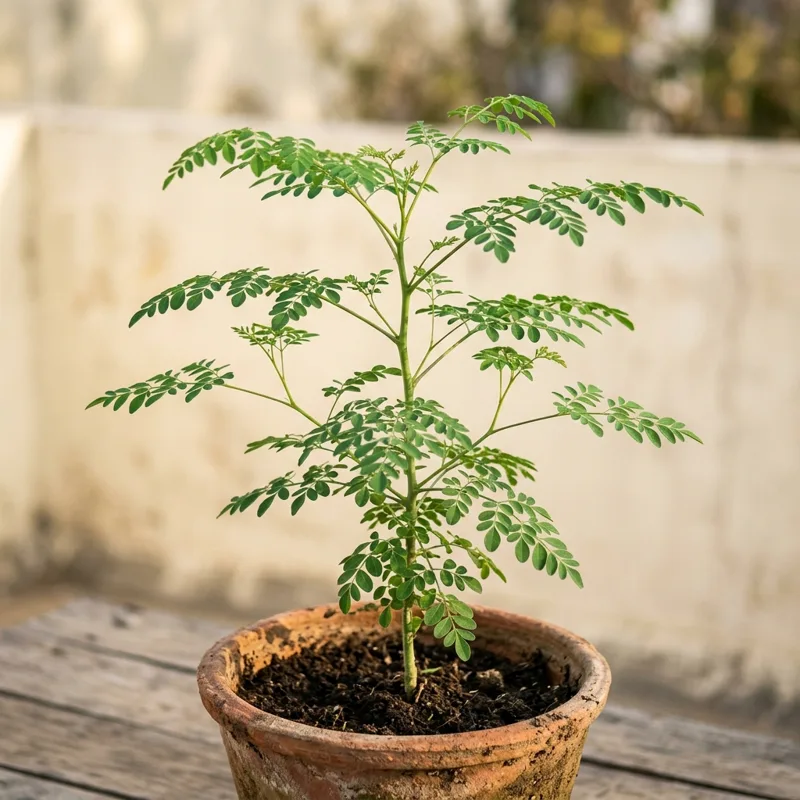
Moringa — sahjan, drumstick — is a favourite of Indian home gardens for good reason. It grows fast, its leaves go into dal and sabzi, its pods go into sambar, and once established it asks for very little. The honest catch is in the name of the game: moringa wants to become a tree, several metres tall, with a thick trunk. Growing it well means deciding early whether you want a tree or a harvestable bush — and pruning accordingly.
Pot or ground? Decide first
In the ground (a garden bed, a farmhouse, a society green), moringa grows into a proper tree within a couple of seasons, with a canopy you harvest from with a ladder or a long stick. It needs full sun and space — keep it a couple of metres from walls and drains, because the trunk thickens fast. In a pot, it stays a manageable bush if you prune it, and a large container — 40 cm across or more, with drainage holes — can give you regular leaf harvests for years. A pot-grown moringa will not give you the big drumstick harvest of a ground tree, and it will need repotting and root pruning over time. That is the trade-off: a pot gives you leaves within reach; the ground gives you a tree.
Sun and warmth
Moringa loves heat and full sun — six or more hours of direct sun a day suits it best, and it is happiest in the warm months. It grows quickly once established, and pinching the growing tip keeps a container plant bushy instead of shooting up into a single pole. Young plants are the tender part: a cold Delhi winter night can damage a young moringa, so keep a first-year pot plant sheltered from frost and cold wind, and hold off heavy pruning until the warm season returns. A mature tree shrugs off far more cold than a seedling.
Soil and water
Moringa is not fussy about soil, but it hates wet feet. Use a free-draining mix — ordinary garden soil with compost and a generous share of sand or perlite — and never let a pot sit in a saucer of water. Water a young plant regularly while it establishes, then ease off: a mature moringa is fairly drought-tolerant and usually suffers more from overwatering than from a dry week. In a pot, water when the top few centimetres of mix feel dry, and feed lightly with mature compost a few times in the growing season. See our compost, vermicompost and manure guide for what to feed it with.
Starting: seed or cutting
Seed is the easiest start: fresh moringa seed germinates readily in warm weather, usually within one to two weeks, sown about a couple of centimetres deep in a pot or directly where it will grow. Sow in late winter or spring so the seedling gets a full warm season to establish. A thick branch cutting — about a metre long, from a mature tree — also roots well in warm months: push one end into loose, draining soil, keep it moist but not soggy, and leaves usually appear within a few weeks. Seed-grown plants fruit sooner and more reliably; cuttings are a shortcut when a neighbour has a tree to spare.
Pruning and harvest
Prune in the warm season, never in deep winter. Cut the main stem back to about waist height once the plant is established, and it will branch out into a bush you can harvest from standing up. Pick young leaves regularly — frequent light picking keeps the plant leafy and productive, and the leaves are the part most home growers use. Pods (drumsticks) form on mature branches in the warm season; pick them while they are still tender and snap easily. If pods are left to mature on the tree, they turn woody and the plant puts energy into seed instead of leaves.
Pests and problems
Moringa is generally hardy. The common troubles are caterpillars chewing young leaves in the warm season and the occasional aphid flush on tender tips — both are usually handled by hand-picking and a strong jet of water, and a healthy, sun-grown plant outgrows light damage quickly. Yellow leaves on a pot plant usually mean overwatering or a pot that has run out of room, not a disease. If growth stalls and leaves pale, check drainage first, then feed lightly with mature compost.
In the kitchen
In Indian homes, moringa leaves go into dal, sabzi and paratha stuffing, and the tender pods are a staple of sambar and curries. Use fresh leaves the same day you pick them — they wilt fast. Wash every harvest well before cooking. Moringa has a long history of traditional use in Indian food and home remedies, and you will find many strong health claims about it online; treat those as traditional use, not as medical advice, and enjoy the plant as food, which is what it is best at.
FAQs
Can moringa grow on a balcony? Yes, in a large pot with full sun and regular pruning — expect leaf harvests, not a drumstick tree. How fast does it grow? Very fast in warm weather — see our quick note in Maali Uncle Plant Facts. When should I sow? Late winter to spring, so the seedling gets a full warm season; check the Indian seasonal vegetable growing calendar for the wider sowing picture. Does it need a lot of feeding? No — a light compost feed a few times in the growing season is usually enough. Will it survive a Delhi winter? A mature plant usually does; protect a first-year plant from the coldest nights.
Want a moringa set up properly on your terrace or in your garden? Book an Expert Maali — we match the plant to your space, sun and watering habit.
Is page ko Maali Uncle app mein kholo: app mein kholo