← Maali Uncle website par wapas
Jade Plant Care Guide for Indian Homes
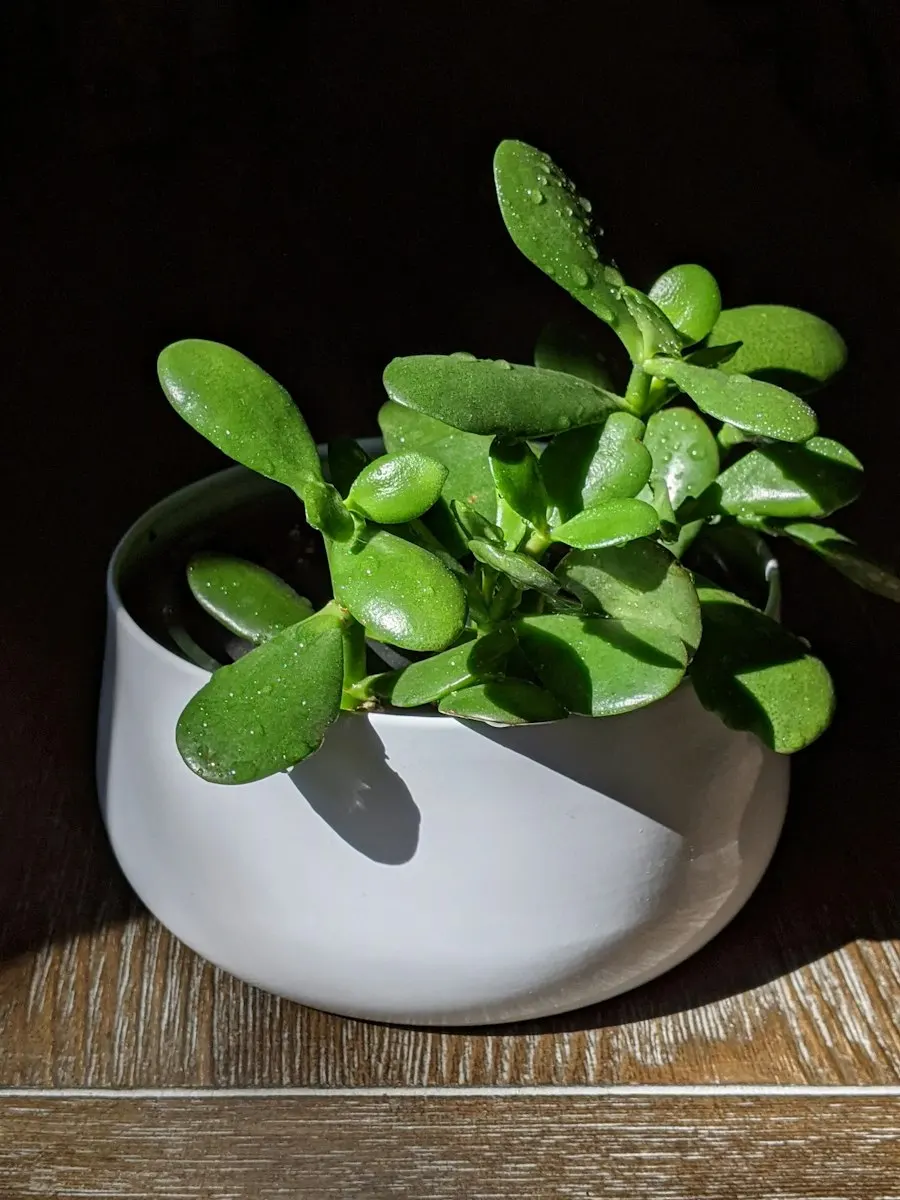
Jade plant (Crassula ovata), often called the money tree, is one of the most forgiving succulents for Indian homes — it can live for decades and slowly grow into a small tree-like shape. It asks for only three things: bright light, soil that dries out, and a pot that drains. Get those right and it largely looks after itself.
Quick answer
- Light: bright light with some direct sun; a sunny windowsill or east-facing balcony is ideal. Red edges on leaves in strong sun are normal sun stress, not disease.
- Water: only when the soil is fully dry — typically every 2–3 weeks indoors, less in winter. When in doubt, wait.
- Pot: terracotta with drainage holes, only slightly bigger than the root ball.
- Soil: free-draining succulent mix (see our potting-mix guide); never dense garden soil alone.
- Pets: mildly toxic if nibbled — keep away from pets that chew plants.
Light: the difference between surviving and thriving
Jade tolerates medium light but grows slow and leggy there, with small pale leaves. In bright light with a few hours of direct sun it grows compact, with thick leaves that may blush red at the edges — that red blush is the plant's natural sunscreen and a sign of good light, not a problem. Move it into stronger sun gradually over a week or two; a sudden jump from indoors to harsh May afternoon sun can scorch leaves.
Water: succulent discipline
Jade stores water in its fleshy leaves and stems, so it is built for dry spells. Soak thoroughly until water runs from the drainage hole, then wait until the soil is completely dry before watering again. The classic mistake is small, frequent sips that keep the top soil damp — roots rot in constantly wet mix. Signs of overwatering: leaves dropping while still plump, soft or translucent stems. Signs of underwatering: leaves wrinkling and thinning — in that case a deep soak revives it. Our overwatering fact explains the finger test, and the snake plant guide follows the same watering logic.
Soil and pot
Use a gritty, free-draining mix: standard potting mix with added perlite or coarse sand works well. The pot must have drainage holes, and the saucer must be emptied — standing water is the fastest killer. Terracotta is a good choice because it breathes and dries faster. Repot only every 2–3 years, or when the plant becomes top-heavy; jade actually flowers better when slightly root-bound.
Pruning for a tree shape
Without pruning, jade grows sprawling. To build a tree-like form, prune back long branches to just above a leaf pair — two new branches usually sprout there, making the plant bushier. Do major pruning in spring, and let cut ends dry for a day before composting them. Pruned stems are also propagation material (below), so nothing is wasted.
Propagation: stems beat leaves
Stem cuttings (best): cut a healthy 3–4 inch stem, let the cut end dry for 2–3 days until calloused, then plant in dry-ish succulent mix. Water lightly after a week. Roots form in a few weeks. Leaf cuttings: gently twist a leaf off, let it callous, lay it on mix — a tiny plantlet forms at the base, but this is much slower than stem cuttings.
Common problems
- Leaves dropping, stems soft: overwatering or no drainage. Stop watering, check roots, repot into dry mix if roots are mushy.
- Wrinkled, thin leaves: underwatering — deep soak, then resume the dry-between-watering routine.
- Leggy, stretched growth: too little light. Move gradually to brighter light and prune back.
- White spots / mealybugs in leaf joints: wipe with a damp cloth, isolate the plant, repeat weekly until clear.
- No growth in winter: normal. Jade slows in cold months; water even less and do not fertilise.
Seasonal care in North India
Summer is the growing season: brighter light, regular (but still soil-dry) watering, and light feeding once or twice with diluted liquid feed or a little vermicompost. Monsoon means watching drainage above all — move pots out of continuous rain if the mix stays soggy. Winter: growth nearly stops, so water sparingly and protect from frost on the coldest nights; Delhi's coldest nights can damage a jade left fully exposed.
Frequently asked questions
Why are my jade leaves turning red? Usually healthy sun stress from bright light — not a disease. If leaves are also shrivelling, check water.
Why is my jade dropping leaves? Most often overwatering. Check the soil and drainage before anything else, as in our yellow-leaves diagnosis guide.
Can jade grow in low light? It survives but grows weak and stretched. A few hours of sun makes all the difference.
Is jade safe for pets? It is mildly toxic if chewed, so keep it out of reach of nibbling pets.
How big can it get? In a pot, with years of care and pruning, it can reach a metre or more and look like a small tree — one reason it is passed down in families.
Maali Uncle ki gardening guide — ghar par paudhon ki dekhbhal, aasan tareeke se. Balcony setup ke liye balcony guide dekhein, aur apni jagah ke hisab se salah ke liye Expert Maali book karein.
Is page ko Maali Uncle app mein kholo: app mein kholo